I will continue studying early history od Britain, and now I am coming to…
The Anglo- SaxonsWhen Romans left Britain in AD410, they never returned.
Britain was invaded by tribes from northern Europe- the Jutes, Angles and Saxons who fought with each other.
The language they spoke is a base of modern English language.
Around AD 600 Anglo-Saxon kingdoms were established in areas which are now England.
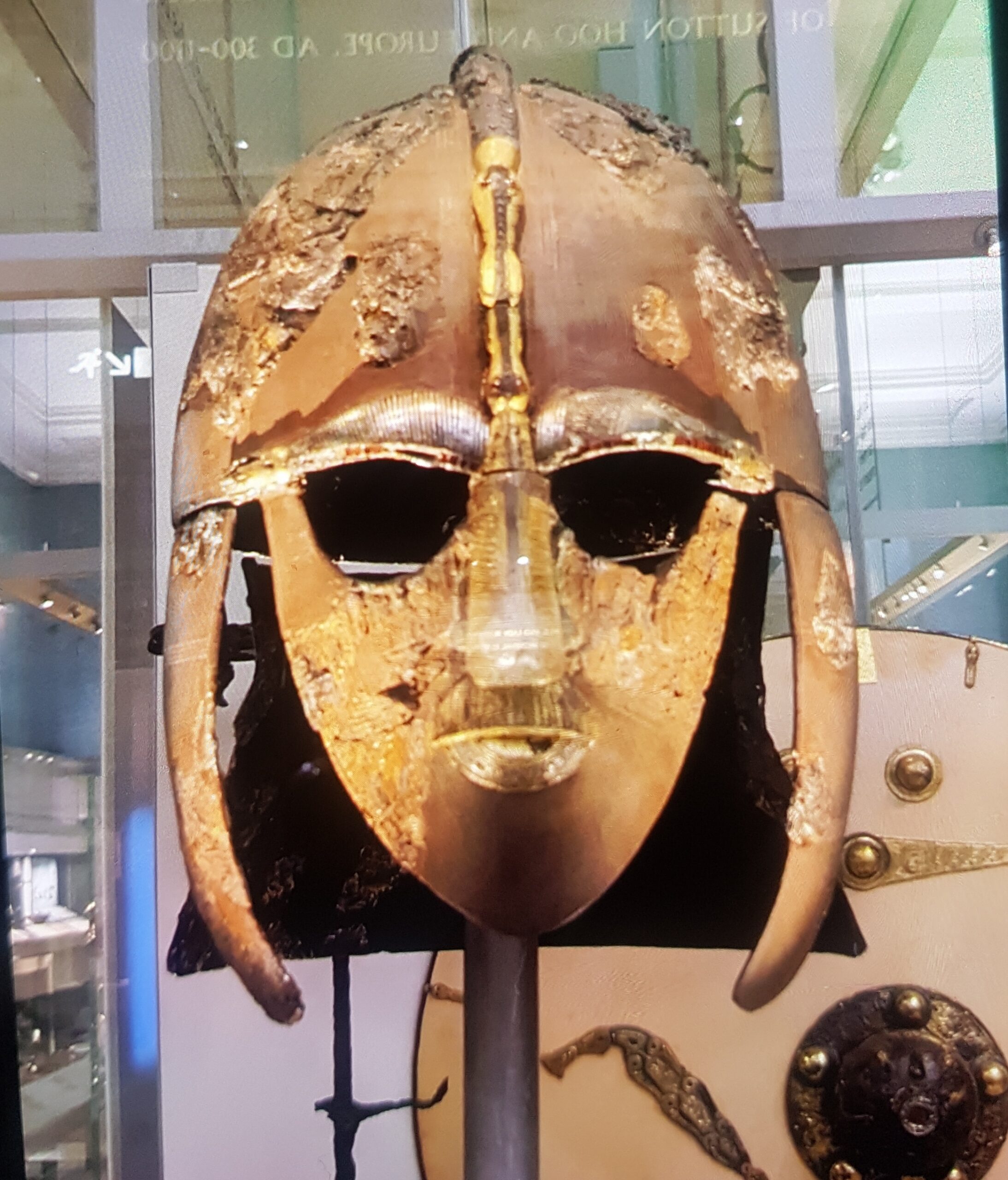
The most famous relict of this time is the burial place of one of ancient kings in Sutton Hoo (Suffolk).
This king was buried with many treasures & armour, all placed in ship covered by a mound of earth.
Parts of west Britain, Wales and Scotland were free from Anglo-Saxon rule.
Anglo-Saxons were pagan first but later Christian missionaries starting to arrive in Britain, mainly from Ireland.
The most famous missionaries were: St Patrick, the patron saint of Ireland & St Columba, founder of monastery on island of Iona (Scotland).
There was also St Augustine, missionary from Rome, who became the first Archbishop of Cantenbury.
He spread Christianity in the South of Britain.
The Vikings

Vikings, who came from Norway, Sweden & Denmark, first arrived in Britain in AD 789 to raid coastal towns and take goods and slaves.
They began to build their own settlements in east England & Scotland.
The Anglo- Saxon kingdoms united under king Alfred the Great and defeated Vikings.
Still, many Vikings still stayed in Britain (east and north) in area called Danelaw.
Many places names came from Vikings language, like Grimsby.
Vikings mixed with locals and converted to Christianity.
Britain was rules mainly by Anglos -Saxon kings , except short period when there were Danish kings ruling like Cnut also known as Canute.
In the north a danger of Vikings attacks was more prominent so people united under one king- Kenneth MacAlpin and this area started to be called Scotland.
It is really interesting to learn that I had never studied early history of Scotland much.
The Norman Conquest
Year 1066 – Norman invasion led by William, Duke of Normandy (northern France) who defeated the Saxon king of England, Harold, at the Battle of Hastings. Harold was killed in battle and William became king of England and now we know him as William the Conqueror. This battle was commemorated in embroidered tapestry called Bayeux Tapestry which can be still seen in France. Tapestry is almost 70 meters long (230feet) & embroidered with coloured wool. Norman conquest was the last successful foreign invasion of England and it changed the country’s government and social structures. Norman French which was the language of the new ruling class, influenced development of English language. Normans invaded Wales too, but slowly Welsh won back their land. They fought also with Scots but they had never invaded Scotland. Important fact – William sent his people all over the country to draw up the list of all people who lived in England – it was so called the Doomsday Book. It still exists as important historic document.
Study notes
Early Britain history seems and is easy to memorise. Most of the content I knew already but now I must remember names of specific places, people and items like Bayeux Tapestry and dates like year 410 when Romans left and date of Hastings battle – year 1066


Comments